

I have been designing engagement rings for more than thirty years, and the most interesting change I have watched is not really about diamonds at all. It is about how couples decide. A generation ago, almost everyone walked in asking about carat weight first. The diamond was the story, and the setting was there to hold it. That order has quietly reversed.
More and more, the people sitting across from me start somewhere else entirely. They ask how to make something that feels like theirs. They have often already decided they do not want a standard solitaire, and the conversation begins with the setting rather than the stone. None of this means interest in natural diamonds has cooled. Demand is as strong as I have ever seen it. What has shifted is how people choose to present the diamond, not the diamond itself.
That single change explains most of what I am seeing on the bench right now, including the steady rise of settings that would have looked unusual a decade ago. Here is what is actually being ordered, and why I think it is happening.
Turning the stone on its side
The east-west setting is the clearest example of the shift. You take an elongated diamond, an oval, a marquise, an emerald cut, and turn it horizontally across the finger instead of pointing it up the hand. The result feels fresh and a little unexpected, but it never strays far from what people still want an engagement ring to look like. Exciting, yet safe. That balance is exactly what a lot of couples are after: something distinctive they will not tire of in a few years.
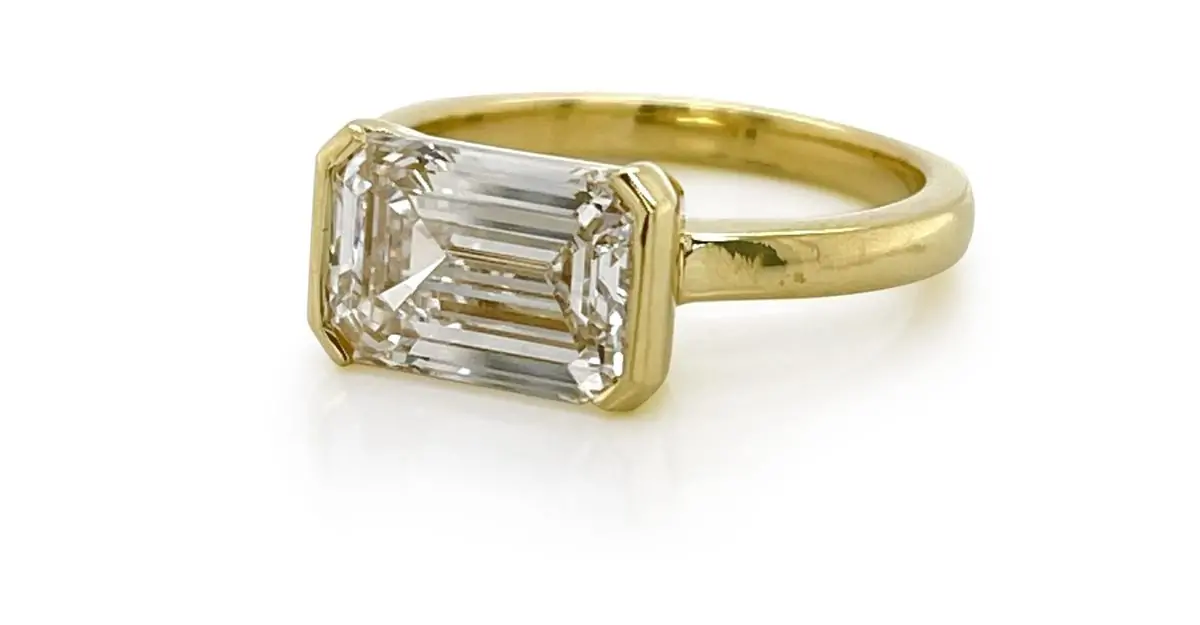
Something clients notice right away is that the stone seems to spread across the finger more. You are not adding carat weight. You are changing how the eye reads the diamond. It is one of the few design decisions that makes a ring feel genuinely different without touching the stone itself. Elongated shapes are the ones that reward it. Turning a round diamond sideways does nothing, but a half-bezel emerald cut set east-west reads as a completely different ring. The look has spread beyond rings too. We have carried the same horizontal orientation into pieces like an east-west oval necklace for clients who want the motif to run across a set.
The bezel’s second life
For most of my career, the bezel was the practical choice. A rim of metal around the stone protects the girdle, never snags on clothing, and suits active hands. Sensible, and a little unglamorous. To understand why it fell out of favor you have to go back to what I think of as the Tiffany effect. Once Tiffany popularized the raised prong-set solitaire in the late nineteenth century, that lifted diamond became the benchmark. The stone sat up in the light, you could see more of it, and prongs ruled the category for well over a hundred years. Against that, bezels looked old-fashioned.

That has genuinely reversed. Clients are choosing bezels now not despite the look but because of it. They like the clean line, the architectural edge, the fact that the ring does not look like every other ring in the room. A bezel-set princess cut with baguettes is a good example of how sharp and modern the style can read. The protection is still there. It has just become the bonus rather than the reason.
The objection I hear most is that a bezel kills the sparkle. It is the biggest misconception about the setting. A poorly designed bezel can close a diamond in, certainly, but a well-made one does not. Most clients are surprised by how much life the stone keeps. The difference is far smaller than people expect.
Two stones, one idea
Of all the non-traditional styles, the toi et moi is the one I am asked for most often. Two stones set side by side, frequently different shapes, sometimes different sizes or even different gems. Its appeal, I think, is that it reads as intentional. Nobody assumes a toi et moi was the first thing in the display case. It suggests thought, which mirrors the proposal itself. The message is not simply that someone chose to get married. It is that they chose to marry this particular person.
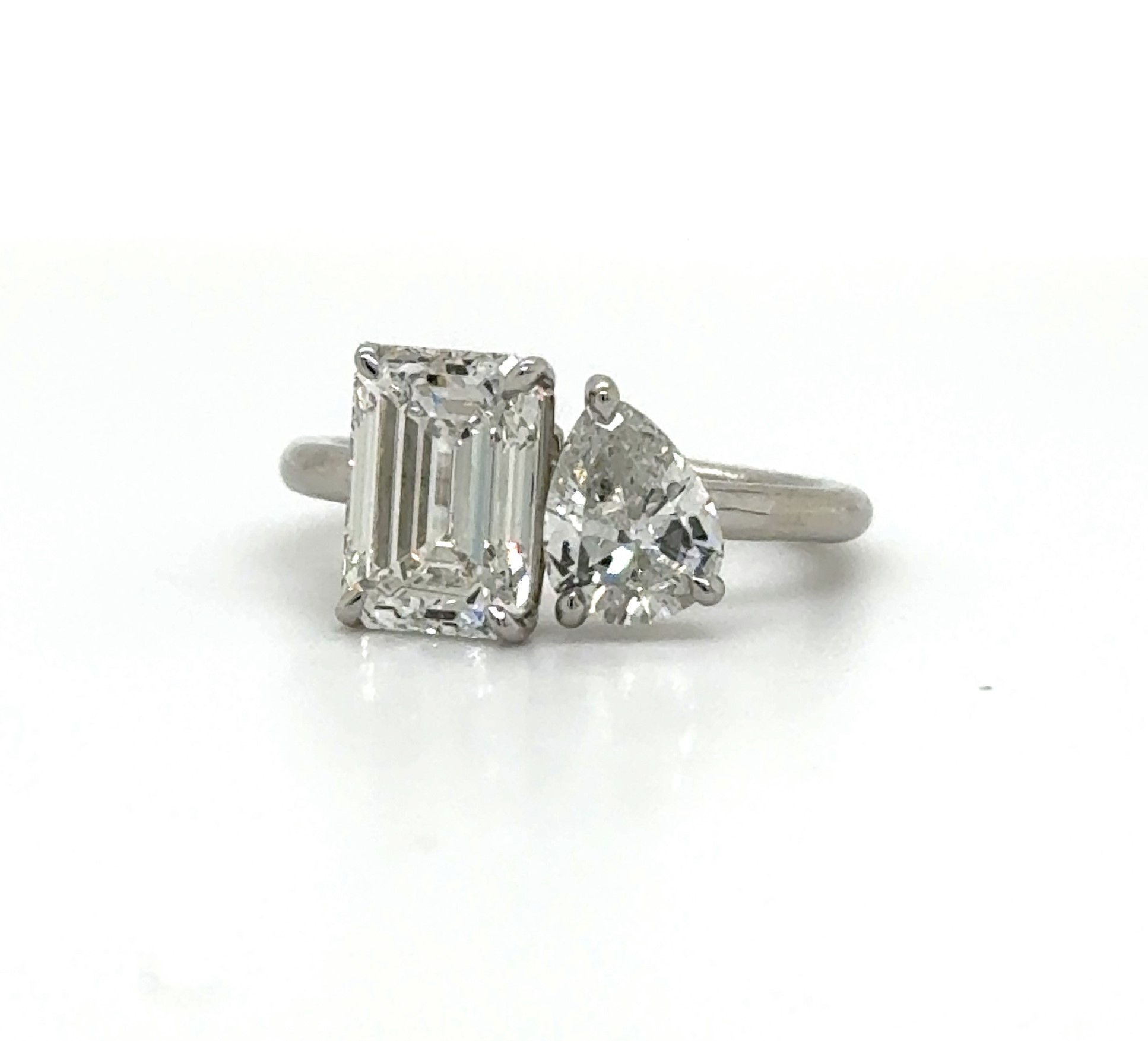
Emerald- and Pear-Cut Two-Stone Diamond Engagement Ring (Toi et Moi)
Then there is the symbolism of the pairing. Two stones, lovely on their own, that make something stronger together. A lot of couples see their own relationship in that: two different people who fit well. The personalizing has become very specific, two shapes chosen for two personalities, or a white diamond beside a colored stone with family meaning. No two are ever quite alike, which is most of the point.
The engineering you do not see
Tension settings get a reaction because the diamond appears to float between the two ends of the band. People assume that means it is precarious. A properly engineered tension setting is the opposite. The stone is held by precisely calculated pressure built into the band, so the security comes from the structure of the ring rather than from claws or a bezel. The engineering has to be exact, and that is the real story of these rings.
They do ask for some patience, and I am honest with clients about it. Resizing an ordinary ring is straightforward. Resizing a tension setting changes the geometry that creates the pressure holding the stone, so it is far more involved. They are beautiful, but they need a specialist to make and to maintain. I usually add that it is a brave person who picks one for a surprise proposal where the finger size is a guess.
Why the setting now carries the meaning
Two things are driving all of this. The first is simple exposure. People see more engagement rings in a week than their parents saw in a year. Social media put every option in front of everyone, and the rings that travel furthest tend to be the unconventional ones worn by people in the public eye. The second reason is more personal, and it is the one that matters. Couples want the ring to say something about the relationship rather than something off a template.

A distinctive ring signals that you chose your person, not just a person, so the ring should be your ring, not just a ring. That is the idea more and more clients circle around, even when they do not put it in those words. They want a marquise with a hidden halo like our marquise hidden-halo ring because it feels personal, or color worked into the design the way a yellow diamond marquise with heart side stones carries it, rather than a familiar solitaire.
This is the real change. The center diamond is still enormously important, and it always will be. But a diamond is hard to personalize. A setting can say a great deal about someone’s taste and how they live, so that is where the personality now lives. People used to see the setting as the frame around the artwork. They are starting to treat the setting as part of the artwork itself. An elongated cushion with marquise side stones is a small illustration of that, where the side stones and the proportions are doing as much work as the center stone.
Choosing a setting that still feels like yours in twenty years
If there is one thread running through all of this, it is intention. The couples who are happiest a decade later are rarely the ones who chased the newest look. They are the ones who chose a setting that matched how they actually live and what the ring was meant to mean. A trend is a good reason to look at something. It is never a good reason on its own to buy it.
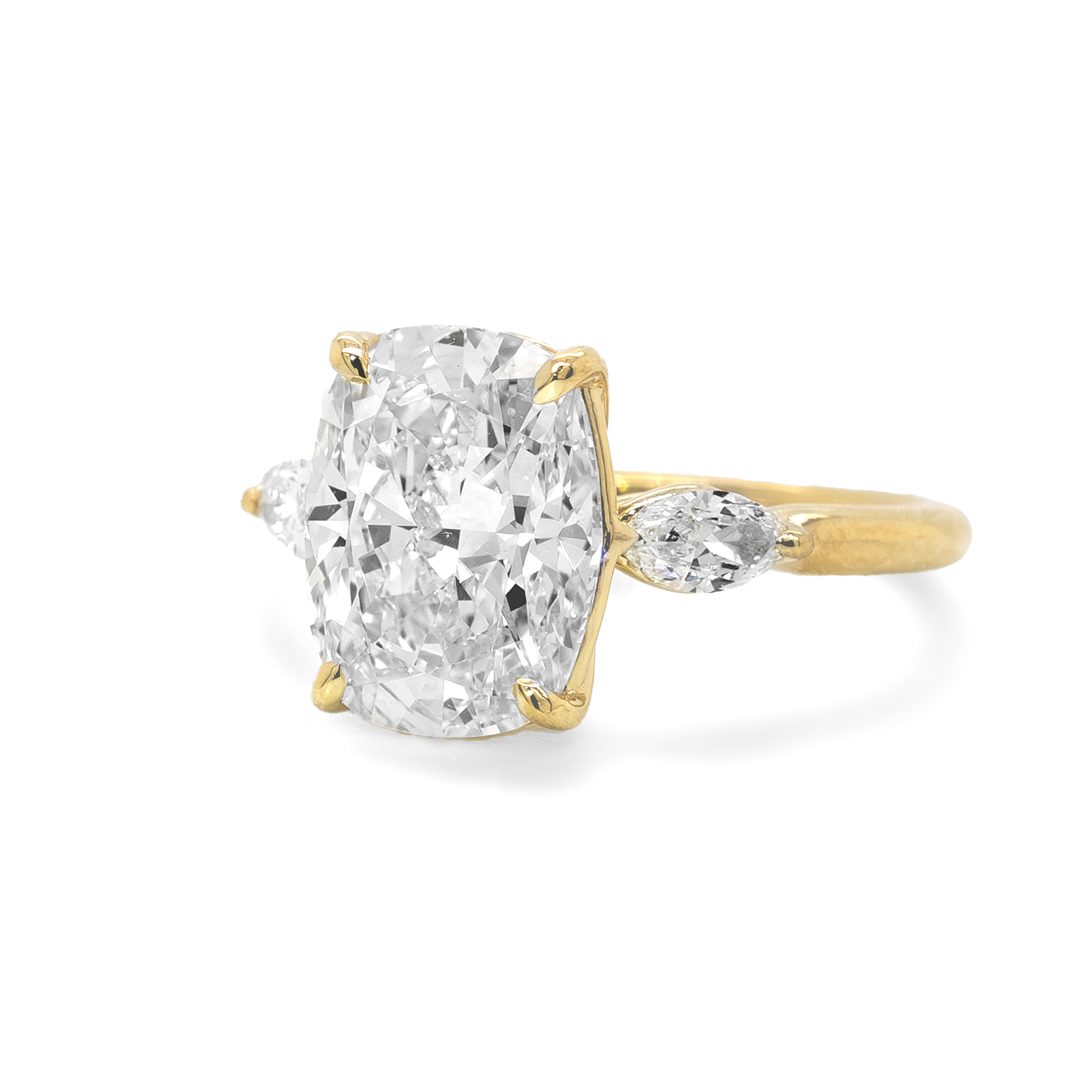
That is the part of the work I enjoy most. When we design a custom engagement ring, the setting is where we make the piece specific to one couple. The diamond anchors it. The setting is what makes it theirs.
